

Blepharoplasty vs Brow Lift for Hooded Eyelids
Posted November 12, 2026 in Brow Lift
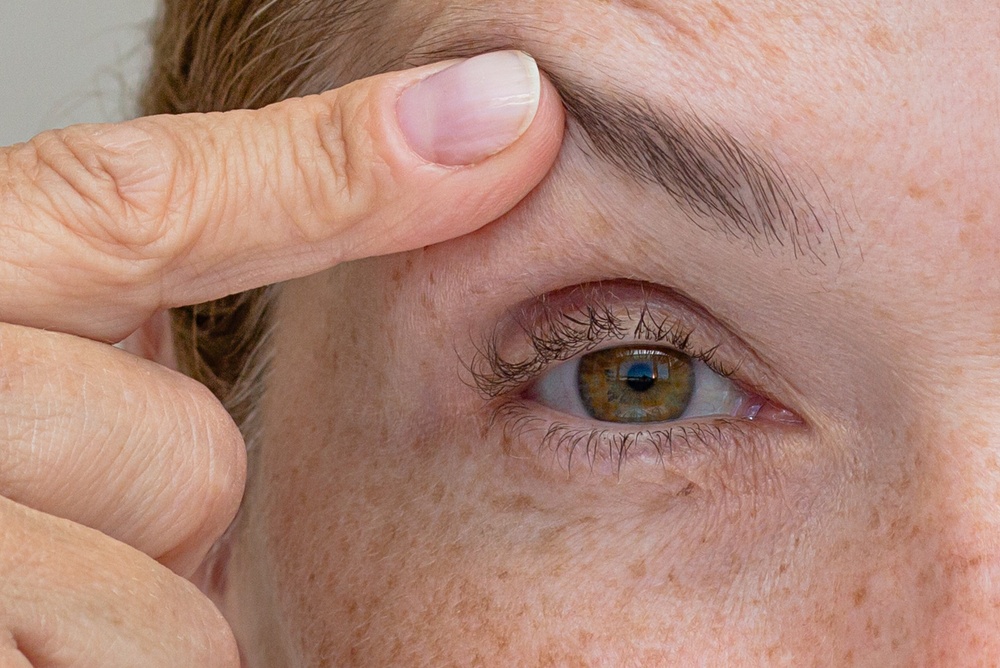
Hooded eyelids come from one of two places: excess skin on the upper lid itself, which upper blepharoplasty removes, or a brow that has descended and pushed skin down onto the lid, which a brow lift corrects, and many patients have some of both. In Nashville, Dr. David Gilpin, a dual board-certified facial plastic surgeon certified by the American Board of Otolaryngology-Head and Neck Surgery and the American Board of Facial Plastic and Reconstructive Surgery, makes that distinction at consultation, because choosing the wrong procedure can leave heaviness behind or create an unnatural look. Either surgery may suit adults who look tired even when well rested or whose upper lid fold now rests near the lashes. A consultation with Dr. Gilpin is where that answer begins.
What Is Blepharoplasty?
Eyelid surgery in Nashville, clinically known as blepharoplasty, removes or redistributes excess skin, muscle, and sometimes fat from the upper eyelids, lower eyelids, or both. Upper blepharoplasty is the technique most directly relevant to hooded eyelids, as it addresses redundant skin that folds over the natural eyelid crease and may partially obscure vision in more advanced cases.
The procedure is performed through a carefully placed incision within the natural eyelid crease, keeping any resulting scar discreet. Dr. Gilpin precisely removes or repositions tissue to restore a more open, refreshed eye contour. Recovery for most patients involves several days of swelling and bruising, with many returning to routine activities within one to two weeks. Blepharoplasty is best suited for patients whose eyelid heaviness originates from excess skin at the lid itself rather than from eyebrow descent. When the brow sits in a natural, anatomically appropriate position and the hooding is isolated to the lid, blepharoplasty is typically the more targeted and appropriate solution.
What Is a Brow Lift?
A brow lift, sometimes called a forehead lift, is a surgical procedure that elevates the eyebrows to restore a more youthful, open appearance to the upper face. As the brow descends with age, it pushes excess skin downward onto the upper eyelid, creating the illusion of eyelid hooding even when the actual eyelid skin is relatively youthful. In these cases, the hooding is a symptom of brow ptosis, not a lid problem.
Modern brow lift techniques range from endoscopic approaches to direct or temporal incisions, depending on a patient’s anatomy and goals. The procedure addresses not only brow position but also horizontal forehead lines and overall brow heaviness. Recovery is generally comparable to blepharoplasty, with most patients resuming normal activities within one to two weeks. A brow lift may also be combined with upper blepharoplasty when both brow descent and true lid excess are present, a scenario that is more common than many patients initially expect.
Key Differences Between Blepharoplasty and a Brow Lift for Hooded Eyelids
How Each Procedure Works
The two procedures correct hooding from different starting points.
- Blepharoplasty: removes or redistributes excess tissue at the eyelid itself through an incision in the lid crease
- Brow lift: elevates the brow complex through incisions at or above the hairline, correcting the descent that pushes skin onto the lid
Primary Treatment Area
Each surgery works on a different part of the upper face.
- Blepharoplasty: upper eyelid, lower eyelid, or both
- Brow lift: forehead, brow position, and upper facial framework
Results Timeline
Results emerge on a similar but not identical schedule.
- Blepharoplasty: initial improvement visible as swelling and bruising fade, typically within two weeks, with results continuing to settle after that
- Brow lift: swelling subsides over one to two weeks, at which point results begin to emerge
Longevity of Results
Both procedures offer lasting improvement, with a few differences.
- Blepharoplasty: results may last many years; natural aging continues over time
- Brow lift: results are long-lasting, though the face continues to age naturally
Recovery
Recovery is broadly similar for the two surgeries.
- Both procedures: most patients experience one to two weeks of downtime, with bruising and swelling being the primary concerns
The nuance that a simple side-by-side comparison cannot fully capture is this: the two procedures often address the same visible complaint through different anatomical solutions. A patient may present with what appears to be excess eyelid skin but, on careful examination, the underlying cause is a brow that has descended below its youthful position. In that scenario, performing blepharoplasty alone may remove too much skin and compromise the ability to close the eye fully, while still leaving the patient with brow heaviness.
Accurate diagnosis of the anatomical driver is the most important factor in achieving a natural, satisfying outcome, and it requires a surgeon with deep subspecialty expertise in facial anatomy. Dr. Gilpin’s before-and-after gallery shows how these distinctions translate into real outcomes.
Which Procedure Is Right for You?
The decision between blepharoplasty and a brow lift begins with an honest anatomical assessment. Patients who are well suited to blepharoplasty alone typically have brows that rest at or above the orbital rim in a natural, age-appropriate position, with excess skin concentrated at the eyelid crease itself. These patients often notice a fold of skin resting on or close to the lash line and may describe a feeling of heaviness or fatigue even when well rested.
Patients whose hooding is more accurately described as a result of brow descent may notice that lifting their brows manually with their fingers produces the most dramatic visual improvement. If elevating the brow resolves most of the heaviness, that strongly indicates a brow lift addresses the root cause. Some patients present with both conditions simultaneously, and a combined approach produces the most harmonious result.
Age, skin quality, the degree of soft tissue laxity, and individual aesthetic goals all factor into the recommendation. Dr. Gilpin, who is dual board-certified by both the American Board of Facial Plastic and Reconstructive Surgery and the American Board of Otolaryngology-Head and Neck Surgery, evaluates each patient individually rather than applying a one-size-fits-all approach. Learn more about the causes of hooded eyelids and how the practice treats them.
Why Choose Gilpin Facial Plastics in Nashville?
Dr. Gilpin is a facial plastic surgeon in the truest, most focused sense of the term. His practice is devoted entirely to the face, and every procedure he performs, every technique he has mastered, and every continuing education hour he invests reflects that singular commitment. He holds dual board certifications, an achievement very few surgeons nationwide can claim, and he trained under Dr. Mike Nayak, one of the world’s foremost experts in facial plastic surgery.
Recognized as a Castle Connolly Top Doctor for six consecutive years and a RealSelf Hall of Fame honoree, Dr. Gilpin brings peer-validated excellence to every consultation. Procedures are performed in a fully accredited, in-house surgical suite that reflects the boutique, luxury experience the practice is built around. His personal involvement doesn’t end in the operating room: Dr. Gilpin personally calls patients or their caregiver the night after surgery to make sure recovery is on track. When you are weighing blepharoplasty against a brow lift in Nashville, that level of subspecialty depth and personal care matters.
Frequently Asked Questions
Can blepharoplasty and a brow lift be performed at the same time?
When a patient has both true excess upper eyelid skin and a descended brow position, combining blepharoplasty with a brow lift in a single surgical session is a well-established approach. Combining procedures reduces total recovery time compared to staging them separately and allows the surgeon to address both anatomical contributors to hooded eyelids at once. Dr. Gilpin evaluates each case individually to determine whether a combined approach is appropriate for a given patient’s anatomy and health history.
How do I know if my hooding comes from my eyelids or my brows?
A simple self-assessment is to gently lift your brows to their natural, more youthful position and observe whether the hooding improves significantly. If elevating the brow resolves most of the heaviness, brow descent is likely the primary driver. If substantial excess skin remains at the eyelid crease even with the brow lifted, blepharoplasty may be the more targeted solution. That said, an in-person evaluation with a facial plastic surgeon is the most reliable way to identify the actual anatomical cause.
How do the costs of blepharoplasty and a brow lift compare?
The cost of each procedure reflects the complexity of the technique, the surgical facility, anesthesia, and the surgeon’s level of expertise. Brow lift surgery is generally more involved than upper blepharoplasty alone, which may be reflected in pricing. When both procedures are performed together, combined pricing may be more cost-effective than scheduling two separate surgeries. Financing options may be available, and the team at Gilpin Facial Plastics can discuss fee structures in detail during your consultation.
What does recovery look like for each procedure?
Both procedures involve a recovery period during which bruising and swelling are expected. For most patients, the most noticeable effects resolve within one to two weeks, allowing a return to social and professional activities. Brow lift patients may experience some scalp numbness or tightness for several weeks beyond initial healing, depending on the technique used. Strenuous activity waits until Dr. Gilpin clears you, and most brow lift patients return to work within about a week. Dr. Gilpin personally follows up with patients after surgery, which many find reassuring during early recovery.
How do I choose a qualified surgeon for blepharoplasty or a brow lift?
Seek a surgeon who is board-certified specifically in facial plastic surgery, as this credential reflects dedicated training in facial anatomy and technique. Dual board certification, as Dr. Gilpin holds, adds an additional layer of credentialing rigor. Review before-and-after photos that reflect natural, proportionate results rather than over-corrected appearances. A surgeon who specializes exclusively in the face, rather than general plastic surgery, brings a depth of subspecialty focus that may translate into more nuanced outcomes for procedures in this region.
Take the Next Step Toward Clearer, More Refreshed Eyes
If you are weighing blepharoplasty against a brow lift and want an expert, honest opinion from a surgeon dedicated to the face, Gilpin Facial Plastics in Nashville, Tennessee, is ready to help. Request a consultation online to meet with Dr. Gilpin and find out which approach is right for your anatomy and your goals.

Dr. David Gilpin is Nashville's most accomplished dual board-certified facial plastic surgeon and the founder of Gilpin Facial Plastics, the city's largest facial plastic surgery and medspa practice. With advanced fellowship training under one of the world's leading experts in facial plastic surgery, Dr. Gilpin brings extensive knowledge, skill, and experience to every procedure he performs. He is particularly recognized for his expertise in facelift plastic surgery, delivering natural-looking facelifts that enhance facial harmony while preserving each patient's unique features. Committed to continual learning and innovation, Dr. Gilpin stays at the forefront of facial rejuvenation techniques to provide patients with the most advanced and cutting-edge facelift procedures available.
Renowned for his personalized approach to both surgical and non-surgical facial procedures, Dr. Gilpin is known for achieving refined, long-lasting, and natural results. He has been featured in Nashville Lifestyles, recognized as a RealSelf Top Doctor, and regularly serves as a national speaker, sharing his expert knowledge with peers across the country. His clinical work has also been featured in Plastic and Reconstructive Surgery, the official journal of the American Society of Plastic Surgeons, where his case results were cited in a 2026 review on the use of recombinant platelet-derived growth factor (PDGF-BB) in tissue repair and regenerative medicine. Handpicked by his peers as a Castle Connolly Top Doctor for the past six years and selected by Allergan to host the official Allergan Botox Day celebration two years in a row, Dr. Gilpin is trusted by A-list clients and respected colleagues alike. His leadership, experience, and compassionate care firmly establish him as one of the most sought-after facial plastic surgeons in Nashville, TN, and the eastern United States.
HAVE A QUESTION?
Are you looking to enhance your appearance and boost your confidence? Complete this form to learn more or schedule a consultation with one of our experts at our Nashville, TN office. From facial plastic surgery to lasers & aesthetics, we offer a variety of services that help you put your best face forward.
Ask a Question
OUR EXPERIENCE
IS INVALUABLE

